Wuhan - Things to Do in Wuhan in December

Things to Do in Wuhan in December

December weather, activities, events & insider tips

Fair time to visit Low Season · Budget Friendly

December Weather in Wuhan

Long-run averages for December

51°F (10°C) High Temp
37°F (2°C) Low Temp
1.2 inches (30 mm) Rainfall
66% Humidity
5 Rainy Days
3 Sunny-Day UV
⚠ Cold waves (known locally as han chao) can push temperatures to minus 5°C (23°F) or below with short notice, occasionally arriving overnight and turning a manageable cold day into a harsh one. Monitor local weather forecasts daily. Have indoor alternatives ready for any day the temperature drops sharply. Pack layers. ⚠ Dense fog forms along the Yangtze and Han rivers on calm December mornings, occasionally thick enough to reduce visibility below 200 metres (650 feet) and delay river ferry services. Waterfront walks and skyline photography are best saved for afternoons when fog has burned off. The fog itself, rolling slowly across the water and muffling the sounds of barge traffic, is an atmospheric experience if you are not in a rush. Worth seeing.

Is December Right for You?

Weigh the advantages and considerations before booking

Advantages
  • + December is Wuhan's driest month, with only about 1.2 inches (30 mm) of rain across roughly five days. Clear skies dominate. You can plan outdoor sightseeing at Yellow Crane Tower and East Lake without constantly dodging downpours. This is a sharp contrast to the summer deluge that dumps over 10 inches (257 mm) in July alone.
  • + Tourist crowds thin to nearly nothing. This transforms the experience at marquee sites like the Hubei Provincial Museum and Yellow Crane Tower. Lines that stretch for half an hour in cherry-blossom season simply vanish. You'll have the bronze bell hall largely to yourself. Lakeside paths at East Lake feel like private walks.
  • + Wuhan's winter food culture reaches its peak in December. The city's appetite pivots hard toward slow-simmered lotus root and pork rib soup, fiery duck neck snacked on with numb-tingling Sichuan peppercorn, and the morning ritual of hot dry noodles tossed in sesame paste. Cold weather makes everything taste more urgent. The street food stalls steam like small engines in the dawn air.
  • + Accommodation prices drop well below autumn and spring peaks. December is firmly off-season. Mid-range stays that would require advance booking during the March cherry blossom crush are available with minimal planning. The rates free up budget for food and day trips.
Considerations
  • − The damp cold is Wuhan's defining winter challenge, and it is worse than the numbers suggest. The city sits at the confluence of the Yangtze and Han rivers. The humidity turns 2°C (37°F) into a penetrating chill that settles into your joints in a way that dry cold at the same temperature simply does not. Worse, Wuhan is south of China's Qinling-Huaihe heating line. Most buildings lack centralized heating. Expect to keep your coat on in restaurants, older shops, and even some lobbies.
  • − Daylight is short. The sun sets around 5:20 PM. This compresses your outdoor window to about nine hours if you start early. Lingering at East Lake past mid-afternoon means walking back in twilight. The Yangtze waterfront loses its grandeur once the light goes flat.
  • − Grey, overcast skies are the norm even on dry days. December in Wuhan rarely delivers the crisp blue winter sky you might expect in Beijing or Kunming. The muted light flattens photographs and can make the city feel heavier than it deserves. The fog rising off the Yangtze at dawn has its own quiet drama if you catch it.

Best Activities in December

Top things to do during your visit

Wuhan in December settles into a quiet, steel-grey stillness that strips the city down to its essentials. The average high hovers around 10°C, the low dips to 2°C, and rainfall is the lightest of the year at roughly 30 mm, a fraction of the drenching summers that swell the Yangtze and Han rivers to their banks. The air carries the mineral smell of cold river water and, on the best mornings, wood smoke from street-side charcoal grills firing up before dawn. Bare sycamore branches line Zhongshan Avenue and the French Concession streets of Hankou, and the pavement gleams with a thin frost that burns off by mid-morning. This is Wuhan stripped of the crowds that flood East Lake's cherry-blossom paths in spring and the sweltering humidity that turns July into an endurance event. December's dryness and low light give the city a cinematic clarity. The Yellow Crane Tower stands sharp against a pale sky. The Yangtze runs broad and gunmetal beneath the First Bridge. The cold sends locals indoors to the things Wuhan does better than almost any Chinese city: eating. December mornings begin with re ganmian, hot dry noodles tossed in sesame paste so thick it coats the chopsticks, the nutty fragrance cutting through the chill at shopfront counters along Hubu Alley and Liangdao Street. By midday the city's signature doupi, a crisp crepe stuffed with sticky rice and diced pork, crackles from flat griddles in Wuchang side streets. Evening belongs to hotpot and grilled skewers along Jiqing Street in Hankou, where the sizzle of cumin-dusted lamb and the sour tang of pickled radish fill the narrow lane even in the coldest weeks. The pace of daily life slows just enough to make Wuhan explorable on foot in a way that summer's heat forbids, and the major museums and temples operate without the queues that peak seasons bring. Accommodation rates drop noticeably from the autumn conference season, and domestic flights into Tianhe International thin out, making December one of the more practical windows to encounter Wuhan on its own terms, unpackaged, unhurried, and honest about what it is: a river city built for eating, walking, and looking at water.

Sense-sational Wuhan (Guided Tour / Private Tour / City Tour)

Sense-sational Wuhan (Guided Tour / Private Tour / City Tour)

private_tour
★ 5.0 2 reviews from $199

Covers the three historic districts of Wuchang, Hankou, and Hanyang in a single private circuit, stitching together the French Concession architecture along Yanjiang Avenue, the incense-threaded courtyards of Guiyuan Temple, and the industrial grit of the old Hanyang Iron Works district in a narrative arc that most solo visitors never piece together on their own. Your guide calibrates the route to the season: in December, that means lingering inside the warm, camphor-scented halls of Guiyuan rather than rushing between outdoor viewpoints, and timing the Yangtze riverfront walk for late morning when frost has lifted and the light across the water turns the colour of weak tea. The tour is conducted privately, so the pace is yours. Stop for a bowl of mianwo, fried rice-flour doughnuts, crunchy and faintly sweet, from a Hankou alley vendor without worrying about a group schedule.

Full day (6-8 hours) Expensive Start at 9 a.m. to catch the morning street-food stalls in Hankou at peak activity and finish at the Yellow Crane Tower as the late-afternoon sun drops behind Wuchang.
A private, full-spectrum orientation to Wuhan's three towns that compresses weeks of self-guided wandering into one coherent day with an expert local narrator.
Insider tip: Ask your guide to include the Zhongshan Avenue stretch between Jianghan Road and Nanjing Road. The restored 1920s bank facades are largely ignored by tourists but offer some of Wuhan's finest colonial stonework and cast-iron balconies, best photographed in December's diffused morning light.
This month: December's dry, cool weather and thin crowds make this one of the easiest months to cover all three districts on foot without the heat exhaustion or rain delays that plague summer tours.
The Hubei Provincial Museum / Expert Multilingual Guide Services

The Hubei Provincial Museum / Expert Multilingual Guide Services

cultural
★ 5.0 1 reviews from $30

One of China's essential regional collections, and the reason sits in a climate-controlled gallery on the second floor: the Marquis Yi of Zeng's bronze bell set, a 2,400-year-old orchestral instrument of 65 bells suspended from lacquered wooden beams, each one capable of producing two distinct tones depending on where it is struck. Stand close and you can see the green patina on the bronze shift under the gallery lights, each bell inscribed with characters naming its pitch. The expert multilingual guide service transforms the visit from respectful gawking into genuine understanding. They walk you through the acoustics, the casting technology, and the political world of the Warring States period that produced this thing, then carry that thread into the adjacent lacquerware and jade galleries where the craftsmanship echoes across centuries.

2-3 hours Budget Weekday mornings, arriving by 9 a.m. when the museum opens, before school groups arrive around 10:30.
The Marquis Yi bell set alone justifies a trip to Wuhan; a knowledgeable guide turns a visual spectacle into an intellectual one.
Insider tip: Visit on a weekday morning before 10 a.m. The bell-performance demonstration in the museum's concert hall runs on a fixed schedule (check the lobby screen on arrival), and arriving early guarantees a front-row seat where you can feel the bronze vibrations in your sternum.
4 hours Walking tour to Wuhan Yellow crane tower and Donghu lake with boat trip

4 hours Walking tour to Wuhan Yellow crane tower and Donghu lake with boat trip

walking_tour
★ 5.0 1 reviews from $120

This four-hour walking route connects two of Wuhan's defining landmarks, Yellow Crane Tower and East Lake, in a single outing that pivots from dense urban history to open water in the span of a morning. The walk begins at the tower itself, perched on Snake Hill above the Yangtze, where in December the cold air sharpens the view downriver to the point where you can trace individual barges threading between the bridge pilings. The descent through Snake Hill's wooded paths smells of damp pine needles and fallen camphor leaves, and the route then crosses into the Moshan district of East Lake, where a boat trip carries you across water so still in the winter low season that the bare willows on the far shore reflect with photographic precision. The lake stretches over 30 square kilometres, and from the boat the city skyline recedes into haze while herons stand motionless in the shallows.

Half day (4 hours) Moderate Start at 8:30 a.m. to reach Yellow Crane Tower before the tour-bus crowds arrive by 10, then enjoy East Lake at its quietest in late morning.
The walk compresses Wuhan's two most celebrated sites into a single half-day arc that moves from hilltop panorama to lake-level tranquility.
Insider tip: Wear shoes with good grip. The stone steps descending Snake Hill grow slick with condensation on cold December mornings, and the lakeside boardwalk near Moshan can be icy before noon.
This month: East Lake's boat service operates year-round, but December's low water and bare-branch scenery give the crossing a spare, ink-wash-painting quality that the lush green canopy of summer conceals.
[Airport Transfer] Wuhan Tianhe International Airport ⇔ Wuhan City Transfer ☆ High reputation for service!

[Airport Transfer] Wuhan Tianhe International Airport ⇔ Wuhan City Transfer ☆ High reputation for service!

transport
★ 5.0 1 reviews from $27

The transfer between Tianhe International Airport and central Wuhan covers roughly 25 kilometres, and while the Metro Line 2 connection exists, arriving at night or with heavy luggage in December's near-freezing temperatures makes a pre-booked private car the more humane option. The vehicle meets you in the arrivals hall. No circling the taxi rank. No negotiating with drivers who quote creative surcharges after midnight. The drive into the city takes between 40 minutes and an hour depending on whether you are heading to the Hankou riverfront or crossing the river to Wuchang. The route follows the elevated expressway above Wuhan's northern sprawl, and on a clear December night the skyline of Hankou's commercial district glows against the dark band of the Yangtze.

40-70 minutes depending on destination Budget Any time; valuable for late-night arrivals or early-morning departures when public transport is limited.
A fixed-rate, meet-and-greet airport transfer that eliminates the friction of arriving in a 10-million-person city where taxi-queue English is minimal.
Insider tip: If your flight lands after 11 p.m., confirm the pickup in advance. Tianhe's arrivals hall empties fast, and having a driver with your name on a board saves the confusion of hailing transport in a near-deserted terminal.
Wuhan Private Authentic Local Food Tour in Central City

Wuhan Private Authentic Local Food Tour in Central City

food
★ 5.0 1 reviews from $39

Wuhan's food identity is fiercer and more particular than most visitors expect. This is the city that invented re ganmian and fights Changsha for the title of China's spice capital. This private walking tour through the central districts dismantles the mystery of what to eat and where. The route threads through the stall-lined alleys of Hubu Alley in Wuchang, where the smell of sesame oil and fermented black bean paste hits you from half a block away, then crosses into Hankou's older laneways where vendors press doupi on searing griddles, the rice-flour skin crackling audibly as it crisps. December is good for this kind of eating. The cold makes the steam rising from each stall visible and theatrical, and the burn of Wuhan's signature mala seasoning, heavy on dried chili and Sichuan peppercorn, lip-numbing and fragrant, lands harder when the air outside is 5°C. Your guide handles the ordering, explains the provenance of each dish, and steers you past the tourist-facing stalls to the ones with the longest local queues.

4 hours Budget Start early, between 7:30 and 8:30 a.m., when breakfast stalls are at full production and the noodle paste for re ganmian is freshly mixed.
A curated, guided path through Wuhan's street-food geography that would take days of solo trial and error to replicate.
Insider tip: Eat nothing before the tour. Portions are small individually but cumulative, and you will sample at least eight to ten dishes across the morning. Bring a handkerchief. The chili oil from Wuhan's spicier snacks will make your nose run in the cold air.
This month: December's cold weather makes Wuhan's hottest, most peppercorn-heavy dishes taste their best. The capsaicin warmth is functional, not just flavour, and locals eat accordingly, leaning into the fieriest options on the menu.
All Inclusive Private Day Trip to Liujiaqiao Village and Yinshui Cave from Wuhan

All Inclusive Private Day Trip to Liujiaqiao Village and Yinshui Cave from Wuhan

day_trip
★ 4.0 1 reviews from $339

This full-day excursion trades Wuhan's urban density for the limestone karst landscape west of the city, reaching Liujiaqiao Village, a cluster of Qing-dynasty courtyard houses built from grey stone and dark timber, tucked into a valley where the air smells of damp earth and wood smoke from cooking fires, and Yinshui Cave, a subterranean river system whose stalactites have been growing, undisturbed, for something close to a geological forever. The drive from Wuhan takes roughly two hours through the Hubei countryside, passing terraced fields that in December lie fallow and brown, edged with persimmon trees still holding a few bright-orange fruits. Inside Yinshui Cave the temperature holds steady year-round regardless of the chill outside, and the sound of dripping water echoing off the cathedral-scale chambers is the kind of silence-within-noise that resets your hearing after days in a city of ten million. The village itself is quiet in winter. Fewer domestic tourists. More time to walk the flagstone paths between courtyard walls without jostling. The inclusive lunch typically features local smoked pork and lotus-root soup, the broth earthy and faintly sweet.

Full day (8-10 hours including transport) Expensive Depart Wuhan by 8 a.m. to maximise daylight at the village. Winter sunset comes early, and the courtyard houses photograph best in midday light when the low sun reaches into the narrow lanes.
A full escape from Wuhan's scale into Hubei's rural karst country, pairing living Qing-era architecture with an underground river that no amount of urban sightseeing can approximate.
Insider tip: Bring a warm, lightweight layer for the cave. While the interior stays warmer than outside in December, the dampness can feel penetrating after 45 minutes underground, and the walkways are slippery near the underground stream.
This month: December's bare landscape and low tourist numbers make Liujiaqiao's stone architecture the visual centrepiece rather than competing with foliage, and Yinshui Cave's stable interior temperature has a genuine respite from the outdoor cold.

Where to Stay in Wuhan in December

Hand-picked hotels across price tiers for December travellers.

Baiya Smart Hotel (Jianghan Road Metro Pedestrian Street Night Market) in Wuhan
★★ Budget

Baiya Smart Hotel (Jianghan Road Metro Pedestrian Street Night Market)

9.4 Excellent · 4725 reviews
From $11 / night
Check Prices on Trip.com →
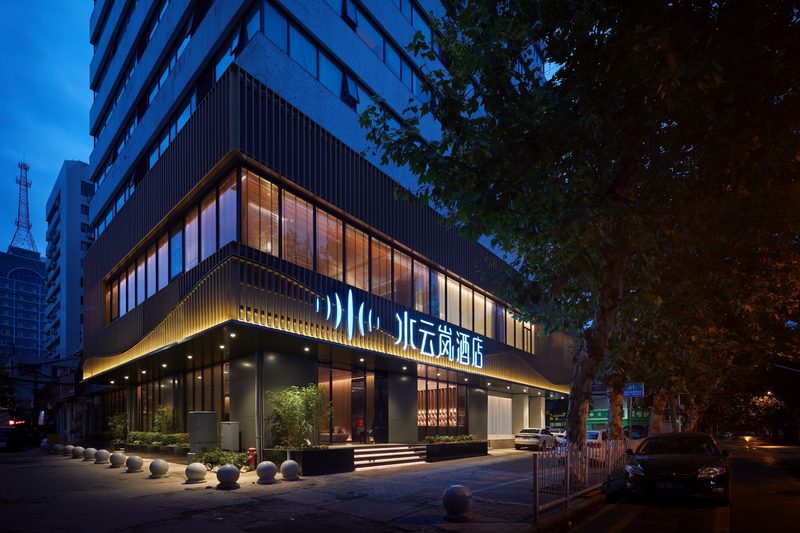
Shuiyunlan Hotel, Jianghan Road Pedestrian Street, Wuhan in Wuhan
★★★★ Mid-Range

Shuiyunlan Hotel, Jianghan Road Pedestrian Street, Wuhan

9.7 Excellent · 17760 reviews
From $37 / night
Check Prices on Trip.com →
Starry Garden Hotel Wuhan Hankou Railway Station Zhuyeshan Store in Wuhan
★★★ Budget

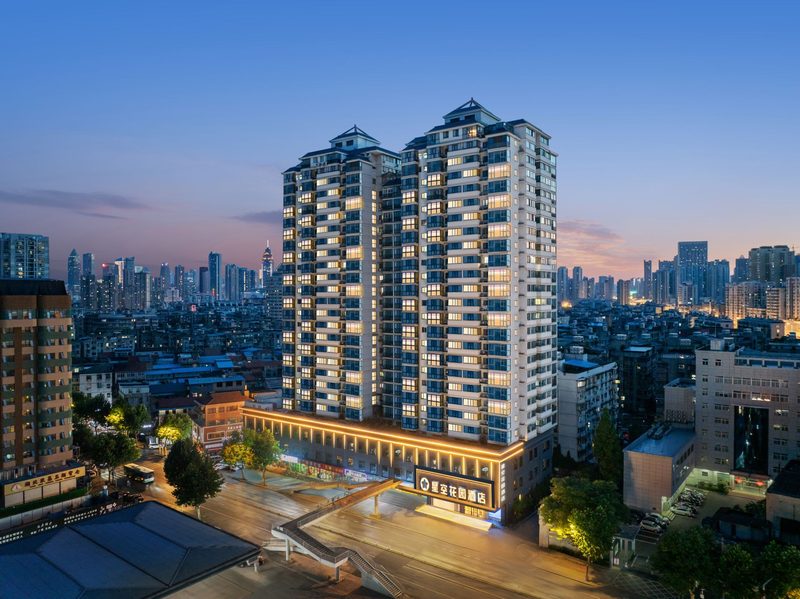
Starry Garden Hotel Wuhan Hankou Railway Station Zhuyeshan Store

9.7 Excellent · 6041 reviews
From $17 / night
Check Prices on Trip.com →

Packing Checklist

Bookmark this page — your progress is saved between visits

Need the full list with shopping links?

Climate-specific gear, brand recommendations, and what to leave at home.

View Wuhan Packing List →

Essential Tips

Insider knowledge and common pitfalls to avoid

Insider Knowledge
Wuhan runs almost entirely on mobile payments. WeChat Pay and Alipay are not optional conveniences, they are the operating system of daily commerce, from street noodle carts to metro tickets to museum gift shops. Cash will be awkwardly refused at many small vendors, not out of rudeness but because they have not handled paper money in years. Set up a payment app with international card linking before you arrive. The fifteen minutes of setup saves days of friction. Do this first. Locals eat re gan mian between 6 and 8 AM, standing at steel counters outside walk-up shops, and the whole ritual takes under ten minutes. If you arrive at a breakfast lane after 9 AM, the best batches are gone and many stalls have already packed up. December's cold makes early rising harder. But the predawn streets, lit by bare bulbs over wok stations, steam billowing into the dark, the scrape and clatter of metal ladles, are Wuhan at its most honest. The noodle shops with the longest queues and no English signage are the ones to trust. Queue longer. Eat better. Wuhan's metro system is extensive, modern, and critically important in December as a warm transit corridor. Line 2 runs from Tianhe Airport directly to the city center, and the network covers both sides of the Yangtze efficiently. On the coldest days, locals use the underground passages between stations as heated walking routes. A stored-value transit card from any station kiosk works on metro, buses, and the Yangtze river ferry, the commuter ferry from Wuchang to Hankou across the Yangtze takes about fifteen minutes and costs almost nothing, and the view of the city from mid-river in December's thin light is better than any observation deck. Take the ferry. Skip the tower. December is the peak of Wuhan's soup season, and the dish to seek out is pai gu ou tang, pork rib and lotus root soup, simmered for hours until the lotus root turns starchy-sweet and falls apart against your tongue, the broth a deep amber that warms you from the stomach outward. Look for small family restaurants with handwritten signs and a midday queue. The ones that have been simmering since dawn produce a richness that quick-service versions cannot match. Lotus root is Wuhan's signature ingredient, the lakes that surround the city have fed a lotus-growing tradition for centuries, and winter is when the roots are densest and sweetest. Arrive early. Wait patiently.
Avoid These Mistakes
Dressing for the thermometer instead of the perceived cold. Visitors from dry-cold climates see 2°C (37°F) and think a medium coat will suffice, then discover that Wuhan's river humidity makes that temperature feel closer to minus 5°C (23°F). The dampness bypasses insulation that works fine in arid Beijing or high-altitude Kunming. Pack as though you are going somewhere significantly colder than the forecast reads, and layer for moisture management rather than just warmth. Ignore the numbers. Trust your skin. Staying only on one side of the Yangtze and missing half the city. Wuhan is three former cities merged, Wuchang on the south bank, Hankou and Hanyang on the north. Yellow Crane Tower, Hubu Alley, East Lake, and the university district are in Wuchang. The historical concession architecture, Jianghan Road, and the waterfront promenade are in Hankou. Travelers who pick one bank and stay there miss roughly half of what makes Wuhan distinctive. The metro crosses the river in minutes, so plan each day around both sides rather than committing to a single neighbourhood. Cross daily. See everything. Expecting indoor warmth everywhere. Unlike cities north of the Qinling-Huaihe line, Wuhan has no centralized district heating. Your hotel will likely have individual heating units that work fine once you crank them up, but restaurants, tea shops, older museums, and certainly all street food stalls operate at or near ambient temperature. Locals keep their coats on indoors through December as a matter of course. Do not shed your layers at the door the way you would in Seoul or Tokyo. Keep your base layers on and your jacket within arm's reach at all times. Keep your coat on. Everyone does.
Explore More Activities in Wuhan

Didn't see anything interesting yet?

Browse Viator's full catalog of tours, day trips, food experiences, and private guides in Wuhan.

See All Wuhan Tours on Viator